“I feel like my whole life’s been lost”
“I would describe my experience with marriage as a miserable one. I feel like my whole life’s been lost,” says Dalal from Hebron, who was married off at the age of 15. Today, her life revolves around serving her husband, who beats her and controls everything she does.
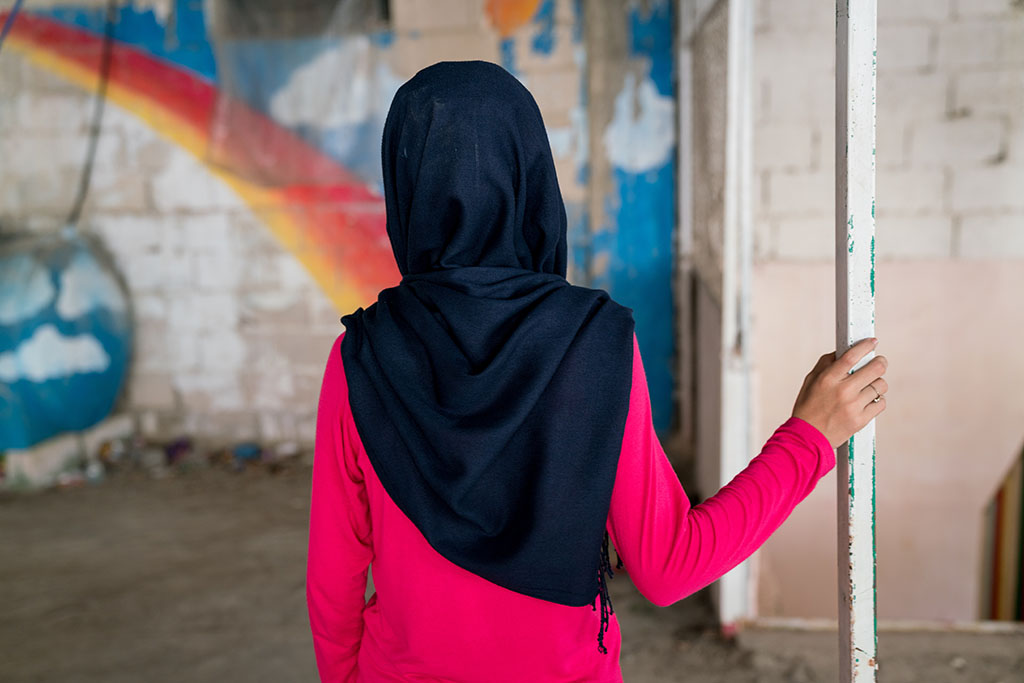
“I used to think of marriage as a rosy affair, full of romantic dates, attention, promises, care, and reciprocity. I had big expectations,” says Dalal.
But everything changed after the marriage. Dalal shared her story with Kvinna till Kvinna’s partner organisation, the Women’s Studies Centre. The organisation works hard to end child marriage in the West Bank and has collected testimonies from girls and young women who have experienced child marriage.
“After I got married that all changed, the feelings went away, and the treatment became awful. The responsibility was much greater than I expected, and the burden is so heavy I can’t bear it,” says Dalal.
Normalisation of child marriage
Dalal was married in 2022 to a man ten years her senior. In her family, child marriage had long been normalised.
“My sister married before me when she was 13 years old, so I thought if she got married so young then I can get married too,” says Dalal.
One of her main reasons for getting married early was to leave school.
“Some girls, myself included, saw marriage as a way to get out of school. I didn’t like school then. After experience, I can say that with all the challenges in school it still would have been easier than the burdens of marriage.”
Violence, control and isolation
Dalal describes her married life as marked by violence, control and isolation.
”I get subjected to violence and cruelty regularly. He yells and breaks things in the house all the time. Half the china in our house is in pieces because of his rage fits against me. He’ll be stressed about something in life and will come and direct all his frustration and blame at me, deprives me of the simplest things. He’s deprived me of finishing my education or working, even from home.”
She continues:
”He demands that I serve him and his family and beats me if I refuse. I cannot even leave the house without him or without a chaperone from his family members. Even my visits to my family are conditional and time limited. My entire life is about serving him and his family. He swears at me and speaks cruelly to me all the time and constantly tells me he doesn’t want me. I don’t know how to confront or respond to him.”
No opportunity to continue her education
Marriage has prevented Dalal from continuing her education, and she is today financially dependent on her husband.
”If I were older and had a degree and a job, I would’ve been able to fight back. He wouldn’t have so much power over me and wouldn’t be able to control me so much if I could support myself,” says Dalal.
She also describes the physical and emotional consequences of entering marriage before she was ready.
”We cannot possibly understand marital life for what it is when we’re so young until reality forces us to. We leave school so young, and in the process, we lose so many of our rights. Even on the level of sex life, when I was younger it used to be awful, painful, loathed. I had no idea how to take care of myself.”
Dalal would like to separate from her husband.
”I feel like my whole life’s been lost after getting married,” she says.