“When you empower one girl, you empower the next generation”
For years, Women’s Studies Centre has worked to strengthen the rights of women and girls in Palestine. As child marriage continues despite legal reforms and war deepens existing inequalities, girls are being denied safety, education and the freedom to shape their own futures.
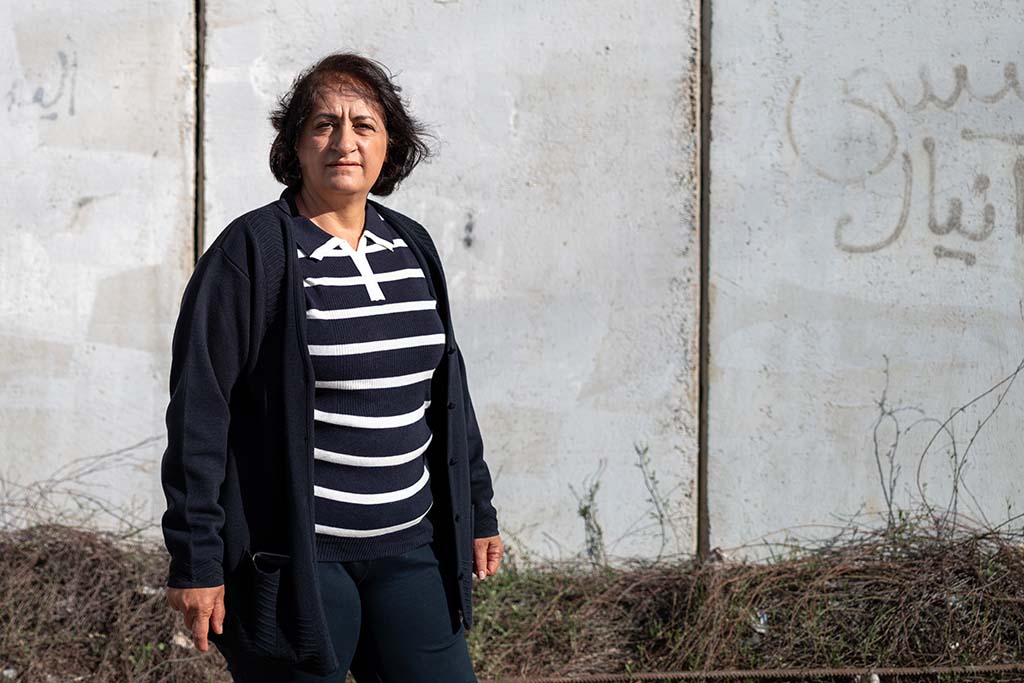
For more than three decades, Women’s Studies Centre, Kvinna till Kvinna’s partner organisation in Palestine, has worked to strengthen the rights of women and girls. Through advocacy, awareness raising and community-based initiatives, the organisation supports girls facing discrimination, gender-based violence and child marriage.
At the centre of their work is a belief in girls’ right to live freely and safely, with equal opportunities and the ability to shape their own futures.
“At our core, we are here to walk alongside women and girls as they strive for justice and equality. We believe every woman deserves a fair chance at a life where she is valued and heard,” says Program Manager Aida Issawi.
Child marriage continues despite legal reforms
In 2019, the Palestinian Authority passed legislation prohibiting marriage under the age of 18. The law contributed to a decline in child marriages, but many exceptions within the legislation still allow the practice to continue.
According to a report on child marriages in Palestine released by Women’s Studies Center, many girls who were allowed to marry through legal exemptions never knew the reason presented to the court. Many girls described losing access to education, independence and childhood. Around a quarter reported experiencing violence within their marriage and many became pregnant shortly after marrying.
Aida says these loopholes in the law remain one of the biggest barriers to ending child marriage completely.
“We truly fought so hard for that law, and it felt like such a victory at the time. However, it also left the door open for many unrestricted exceptions, which has made it difficult to fully realize our dream of ending child marriage once and for all.”
She continues:
“Even though the law has been in place for over six years, the issue remains unresolved. Sadly, those loopholes continue to be a major obstacle in our path, but they only make us more determined to keep pushing for the real, lasting change our girls deserve.”
Girls are denied freedom and opportunities
Aida describes how many girls grow up without the freedom to make decisions about their own lives. Gender-based violence, pressure from harmful social norms and unequal access to education continue to shape girls’ everyday realities.
“The most significant challenge is an upbringing rooted in a lack of self-confidence and forms of gender-based violence. This includes depriving girls of their right to education, the freedom to choose the field of study that suits them, and the right to play. Furthermore, it involves violating their right to self-determination, most notably through the practice of child marriage.”
WSC works to strengthen girls’ confidence and awareness of their rights through workshops, training sessions and creative community activities.
“We work to empower women and girls by raising awareness of their legal and human rights through educational workshops and capacity-building sessions designed to transform their lived realities.”
“Furthermore, we provide them with the agency to exercise these rights by engaging them in peer-to-peer advocacy initiatives, such as community theatre, creative writing, and recreational activities.”
The escalation of violence intensifies the risks for girls
Israel’s escalation of attacks and occupation of Palestine has worsened an already difficult situation for girls and young women in the area. Displacement, insecurity and the collapse of safety have increased vulnerability and deepened existing inequalities.
“Tragically, this war has been among the most violent and devastating in history. It has magnified all the hardships our girls were already enduring—the loss of safety, the constant displacement, and the total lack of privacy.”
“It is heart-breaking to see that some families, feeling they have no other way to protect their daughters in such an unstable environment, have felt forced to marry them off as a desperate means of keeping them safe.”
“Women’s rights are the heartbeat of a healthy society”
After more than 30 years working for women’s rights, Aida says she has seen how inequality can continue across generations if girls are denied equal rights and opportunities.
“I’ve seen how these struggles can pass from mother to daughter. I realised that our community can never truly be free or just until our girls are treated as equals.”
“I chose this path because I believe women’s rights are the heartbeat of a healthy society.”
Despite the challenges girls face, Aida says moments of hope and resilience continue to drive the work forward.
“It’s a mix of emotions. My heart aches when I see a girl lose her spark because of the pressure she’s under. But oh, the joy I feel when I see that same girl find her voice! Seeing them stand tall and demand their rights is what keeps me going every single day.”
International solidarity remains crucial
International support is what makes it possible for WSC to continue reaching women and girls with information, services and safe spaces.
“Support is truly vital for us. It helps us amplify our voices so we can reach even more women and provide them with the very best care and services.”
“Beyond that, it allows us to grow a community of people—both men and women—who are deeply aware of their rights, ensuring that our humanitarian and feminist mission remains strong and continues to empower women to stand up for their future.”
Aida also shared a message to supporters in Sweden and everyone standing alongside women and girls in Palestine.
“To our friends at Kvinna till Kvinna—thank you for standing with us. Your kindness is a powerful reminder to our girls that they aren’t alone and that people far away care about their dreams.”
“You aren’t just donating; you’re giving hope and a hand to hold.”
“We are so deeply grateful to Kvinna till Kvinna for their wonderful support. It means so much to work with an organisation that truly believes in women’s rights and strives so passionately to achieve justice and equality for women all across the world.”