Emergency fund enables local partners to respond in Lebanon
When violence escalated in Lebanon earlier this year, Kvinna till Kvinna activated its emergency fund to support local partner organisations. Through this support, three partner organisations provided emergency assistance to more than 460 vulnerable families and over 1,500 people.
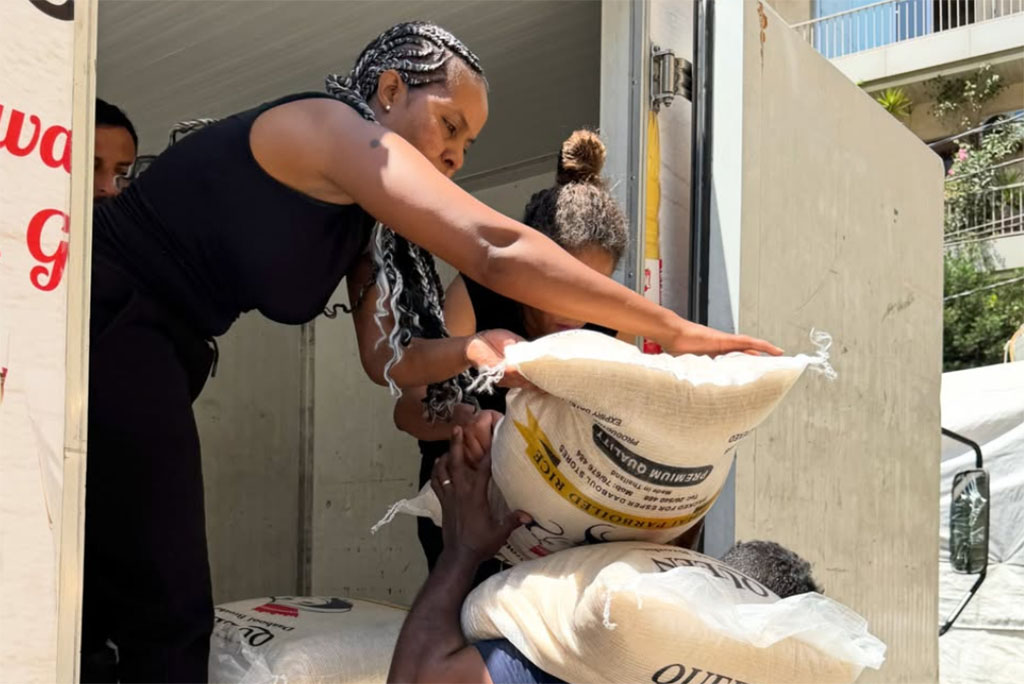
The situation in Lebanon remains extremely serious. Violence continues, humanitarian needs are growing, and women and girls face heightened risks as displacement, insecurity and overstretched services make everyday life even harder.
In response to the escalating crisis, Kvinna till Kvinna’s emergency fund enabled three partner organisations to quickly adapt their work and provide emergency assistance in communities affected by the violence.
Food, cash assistance and emergency supplies
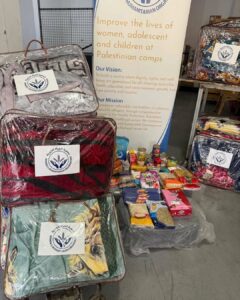
Food and blankets distributed by PWHO. Photo: PWHO.
In Al Chouf and Bourj Al Barajneh Camp, the Palestinian Women’s Humanitarian Association (PWHO) supported families affected by the conflict, including people who had been displaced as well as those who remained in areas under bombardment.
With support from Kvinna till Kvinna’s emergency fund, PWHO:
- distributed 142 food parcels containing essential food items
- provided 100 blankets for families living in temporary shelters and overcrowded conditions
- gave cash assistance to 154 people in Bourj Al Barajneh Camp, helping families cover urgent household expenses and purchase essential items when they could not afford to move to safer accommodation.
Supporting women’s health and dignity
Sada Insan for Development provided hygiene kits to 106 vulnerable households living in informal shelters, including menstrual hygiene products for women and adolescent girls.
The organisation focused on reaching families with limited access to humanitarian assistance while helping reduce health and hygiene risks during displacement.
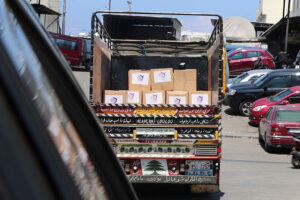
A truck loaded with emergency supplies prepared by Sada Insan for Development for distribution to affected communities in Lebanon. Photo: Sada Insan for Development
“We were able to reach families with limited access to humanitarian assistance and provide timely relief to those most in need. This assistance has contributed to improving living conditions and reducing hygiene-related risks among displaced communities,” says Hiba who works at Sada Insan for Development.
One person who received support from Sada Insan for Development described the impact:
“The hygiene kits arrived exactly when we needed them. We couldn’t afford to buy cleaning materials ourselves, so this support made a real difference.”
Reaching communities often excluded from humanitarian assistance
Egna Legna Besidet focused its emergency response on migrant domestic workers, African refugees and their families who were excluded from mainstream humanitarian assistance.
Through Kvinna till Kvinna’s emergency fund, the organisation made it possible to distribute:
- more than 1,400 hygiene kits
- 6,000 sanitary pads
- infant formula for more than 118 families
- clothing for adults and children.
The funding also helped cover transportation for aid deliveries, volunteers, staff and displaced people across Beirut, Mount Lebanon and Saida.
Kvinna till Kvinna’s support formed part of a broader emergency response, alongside additional donor funding, community contributions and volunteer efforts mobilised by Egna Legna Besidet.
Why flexible funding matters
The response in Lebanon shows how flexible funding can help local partner organisations adapt quickly as needs evolve. It enables them to provide timely support and reach communities with limited access to humanitarian assistance.
As humanitarian needs continue, this type of funding remains essential to supporting women and girls affected by the crisis.