“When I became pregnant, I was forced to leave school”
Pregnant at 16, Nshokano Mwakalwa Horace in the DR Congo was shut out of school and faced pressure to start a family. But thanks to Kvinna till Kvinna’s local partner organisation AFEM, Nshokano now has both hope and renewed self-confidence.
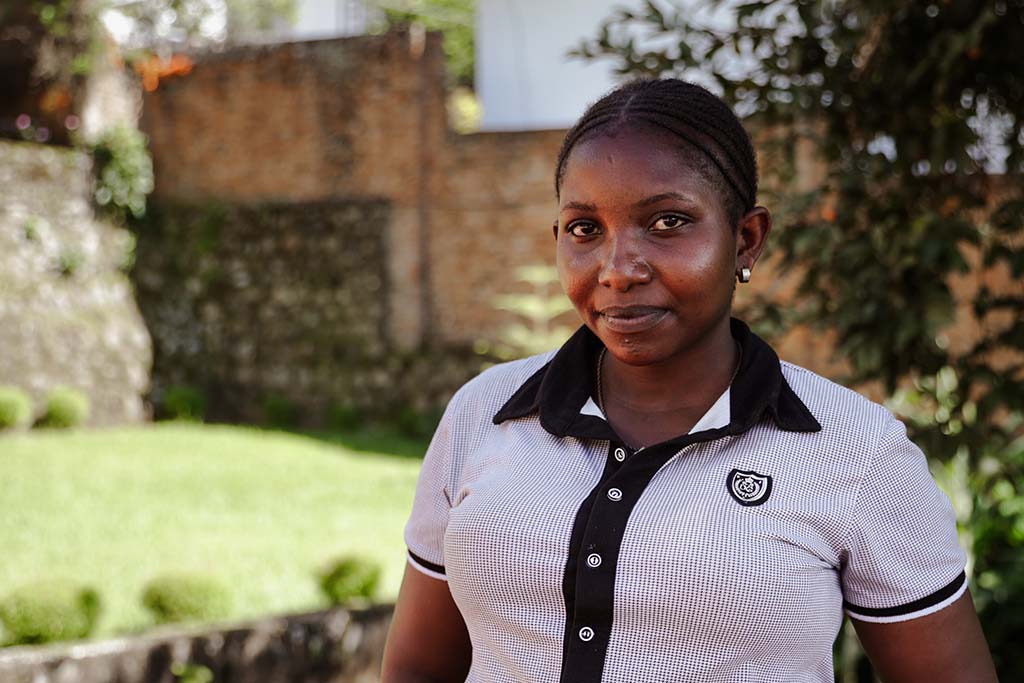
Nshokano is 17 years old and a mother of one. She lives with her parents and has three siblings. During the day, she helps with the household chores, and at school she is preparing for her State Diploma, the exam that marks the completion of secondary education in the DR Congo. But just over a year ago, her life looked completely different and Nshokano was facing serious difficulties. It all began when her father was sent to prison.
“It was an incredibly difficult time for me. My father was the sole provider for our family, my mother didn’t work. Paying for school and even putting food on the table became nearly impossible. My mother and I only had our coffee field as a source of income, and it was barely enough. It was a time of immense struggle,” says Nshokano.
Expelled from school
During this difficult period, Nshokano became pregnant.
“When my father was released and returned home, he saw my condition and decided to cut me off completely, no support, not even for my education. I had already been out of school for three months, too ashamed to leave the house or face anyone. I had been expelled from school, and everyone in the community knew I was pregnant. My parents even considered sending me to live with the man who had gotten me pregnant so I could start a family with him,” says Nshokano.
Support from AFEM
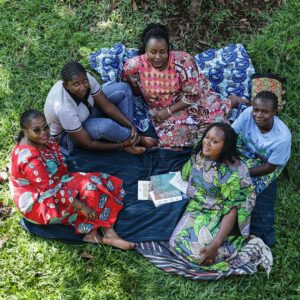
Thanks to the organisation AFEM, Nshokano’s future looks bright. From the left:
Sourire Muhigirwa, project manager at AFEM, Nshokano Mwakalwa Horace, Nelly Adidja, programme officer at AFEM, student Akonkwa Kishanganya Miryam. In green at the front: Cidorho Magambo Rolande, focal point of AFEM in Kalehe. Photo: Ley Uwera
Nshokano wondered what she could do and remembered that the organisation Association des Femmes des Médias du Sud-Kivu, AFEM, had visited her school. The organisation had provided information about its work supporting women and explained that it was looking for young mothers who wanted to participate in its training programmes.
“I turned to AFEM through their focal point because my parents refused to continue my education due to what had happened to me. They had even started considering marrying me off, even though I had just turned 16.”
Representatives from AFEM spoke to Nshokano’s parents and convinced them to let her return to school.
“However, my old school, which was a Catholic school, refused to readmit me because I was pregnant. So, AFEM asked my parents to enroll me in another school. They advocated for me, and the school I attend now agreed to accept me despite my condition. That’s how I was able to continue my education without losing an entire school year,” says Nshokano.
What has AFEM’s support meant to you?
“When I became pregnant, I thought I was worthless, but the advice AFEM gave me helped me take my life back and regain confidence in myself.”
AFEM also taught Nshokano how to develop income-generating activities and strengthen her independence through entrepreneurship. This enables her to contribute to the needs of her household and ease the financial burden on her parents.
“I felt strong when I realised that despite the mistakes I made, I could rise again and take control of my life. Today, I am proud of myself because I didn’t give up.”
Girls are valued less than boys
Nshokano now feels optimistic about the future. She wants to continue her studies and follow the advice she has received from AFEM. But she is aware that life is more difficult for her than it is for boys of the same age.
“In our community, young girls and boys are not treated the same way. Here, it is boys that are taken into consideration first and have the most value within our families.”
Nshokano identifies insecurity, discrimination, and poverty as some of the greatest challenges facing girls. According to her, boys are more privileged, household chores are distributed unequally, and poverty can push some young girls to have relationships with men in exchange for food, clothes or other means of subsistence.
Child marriage is common
Another major problem facing girls in the DR Congo is child marriage. Nshokano explains that girls are often expected to marry before reaching the legal age, particularly if they become pregnant.
”In our community, as a girl grows up, she is expected to get married even before reaching the legal age. If she becomes pregnant, the pressure is even greater, as her parents may force her to marry the man involved.”
When men begin to show an interest in a girl, this is also seen as a sign that she is ready to establish a household of her own, Nshokano explains.
Dreams of defending girls’ rights
Nshokano dreams of completing her education and playing an important role in society. In the future, she wants to lead an organisation that defends the rights of women and girls in her community.
For girls and women in the DR Congo, she hopes for equality, security and the right to education.
“I want authorities to not put girls aside, to treat them equally to boys, to guarantee their security and education,” says Nshokano.