Girls struggle to stay in school in DR Congo
For 16-year-old Rehema Byaombe in the Democratic Republic of the Congo, being able to go to school cannot be taken for granted. “I come from a large family and my parents did not have the financial means to send me to school, so my uncle took over and since then, I have been living with him,” she says.
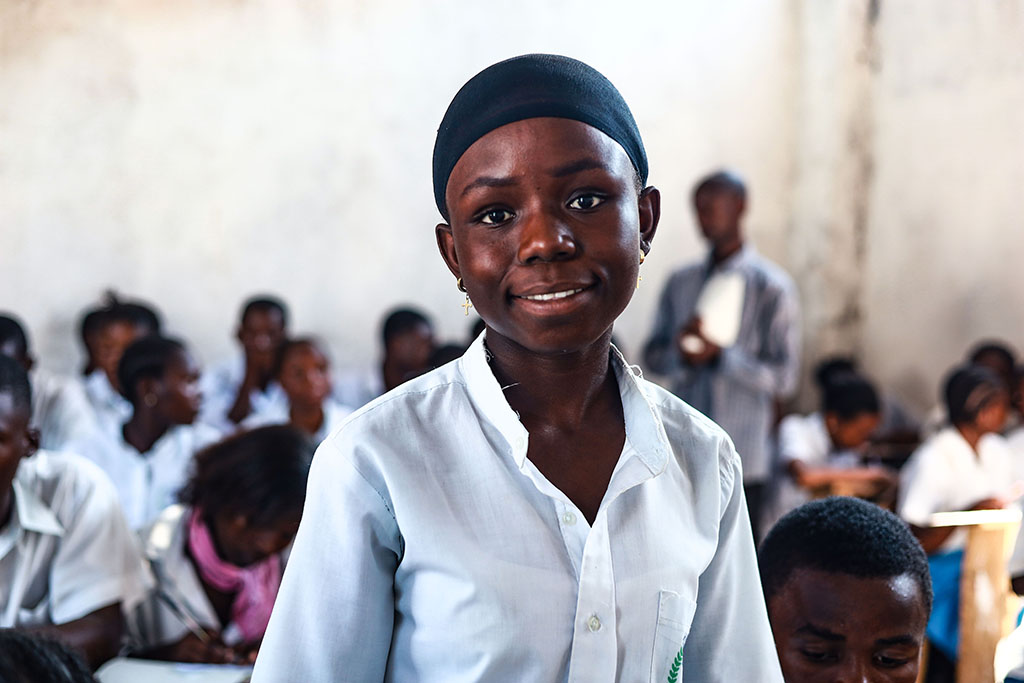
Rehema has eight siblings, and it is difficult for her parents to provide for the whole family. If she had not had her uncle, she would have had to leave school and find a job to help earn money for the household.
Rehema is happy to be able to continue her studies but says that moving in with her uncle as a young girl has not always been easy.
“Every time I have my period I get sick, I have very painful periods. And where I live, I have no support during this period.”
Many stay at home during their period
Menstruation and period pain are major barriers to girls’ education in the DR Congo. Many girls stay at home during their period since sanitary pads and painkillers are expensive. This has caused Rehema a lot of worry coming from a poor household, but she has received help.
“My brother invited me to a discussion group that the organisation CEDEJ organised at our school. And thanks to the training CEDEJ provided on menstruation and how to manage your period, I am no longer stressed about it”, Rehema says.
But not all girls have an uncle who can help them. In the DR Congo, only 50% of girls aged 5–17 attend school, according to figures from UNICEF.
Embarrassing to talk about periods
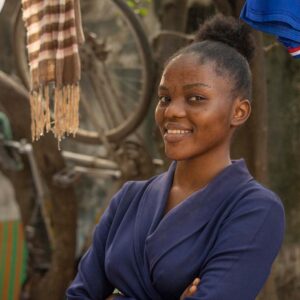
”What is important in my life at the moment is my studies. Because through my studies I am preparing my future”, says Amina Kasimba in DR Congo. Photo: Neema Rachel
Another girl in the DR Congo who has experienced similar problems is 15-year-old Amina Kasimba.
“When I had my period for the first time, I was living with my older sister, I was afraid to tell her about it, so I used her baby’s diapers. When she found out, she was very angry with me. I was ashamed and afraid.”
Amina also received support by taking part in a discussion group that CEDEJ had invited girls to at her school. Her sister encouraged her to join.
“CEDEJ has helped me a lot by teaching me how to take care of myself and manage my period.”
Amina sees girls’ lack of self-confidence as one of the biggest problems and barriers facing girls in the DR Congo, along with inequality, violence and taboos around sexual health.
“My dream is for women and girls to feel safe and confident, to be able to study, work and achieve their dreams,” she says.
CEDEJ stands by girls
Aline Shuni, project manager at CEDEJ, confirms the problems that Rehema and Amina highlight for girls in the DR Congo. She can list a number of challenges facing girls.
“Social norms are dominated by a patriarchal system that prevents women to grow strong. Young girls often have low self-esteem because of the way they are brought up, and school can become like a waiting room, as many leave as soon as they find a husband.”
She explains that in the Uvira region, young girls can also be falsely accused of witchcraft. Another big problem is poverty, and war-related displacement which leaves children separated from family members.
What does CEDEJ do to help girls?
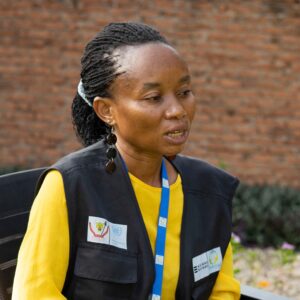
Aline Shuni, project manager at the women’s rights organisation CEDEJ in DR Congo. Photo: Neema Rachel
“The main purpose of CEDEJ is to make sure that young people have access to, and make use of, their rights. Some examples of what we do: We accompany young girls fighting against sexual harassment in schools. We teach girls about their rights, pregnancy prevention, and menstrual hygiene,” says Aline.
She would like to see several improvements to the education system in the DR Congo.
“The educational system should be reformed in favor of young girls. To take into consideration the gender-specific needs in schools, and we also have to educate the parents as they play an important role in girls’ education,” Aline says.