Seven years of the International Training Programme—Strengthening the response to gender-based violence
For seven years, the International Training Programme has strengthened institutions and professionals working to prevent and respond to gender-based violence across five countries. Its legacy lives on through stronger systems, deeper cooperation and long-term networks.
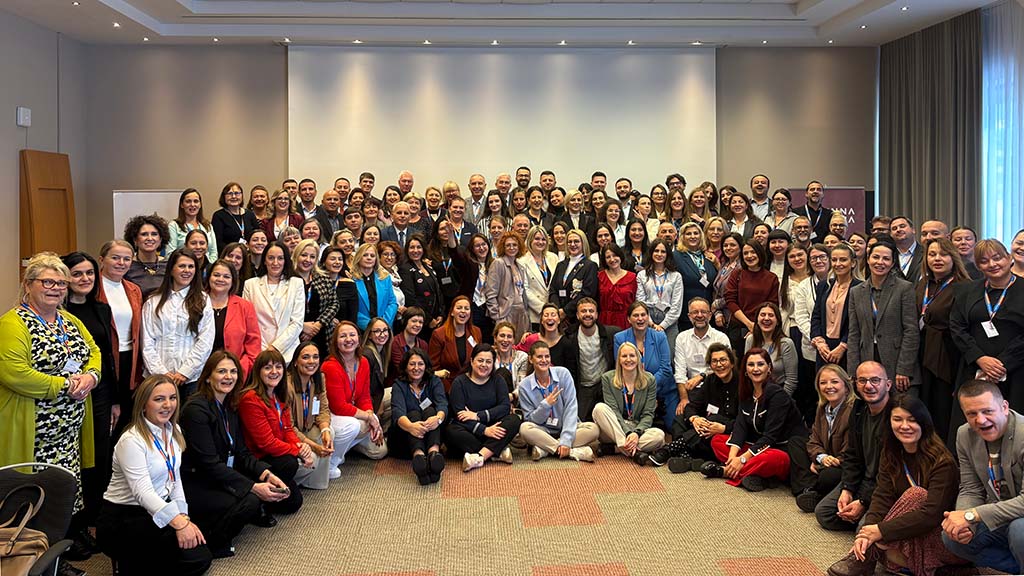
For almost a decade, The Kvinna till Kvinna Foundation and the Swedish Police Authority have jointly implemented the International Training Programme (ITP) on gender-based violence (GBV), commissioned by the Swedish International Development Cooperation Agency (Sida). Designed for mid-level and senior officials from Albania, Kosovo, Montenegro, Moldova and Ukraine, the programme has supported hundreds of professionals in strengthening their capacity to prevent and respond to GBV and fostered a growing cross-sector network.
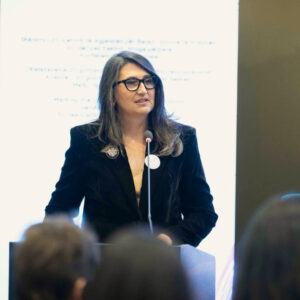
Edi Gusia, Chief Executive of Kosovo’s Agency for Gender Equality and participant in the programme. Photo: Agency for Gender Equality
“Beyond technical knowledge, the ITP has built an international network of professionals working against GBV, across borders, sectors and institutions. This network has become a critical platform for exchanging methods, sharing experience and strengthening professional relationships,” Edi Gusia, Chief Executive of Kosovo’s Agency for Gender Equality and participant in the programme.
A decade of capacity building
Since 2018, the ITP “Prevent and Respond to Gender-Based Violence—Strengthening Agents of Change” has offered advanced training to ten cohorts: a total of 250 participants. The programme combined both in-person learning and online components.
Participants represent key institutions with mandates to address GBV, including police, prosecutors, social services, shelters, health professionals, civil society and government. This cross-sector composition has been a deliberate strategy to strengthen cooperation and enable participants to learn from each other’s perspectives, especially between stakeholders who rarely cross paths otherwise.
”If we look at this period from a bird’s-eye view, we can clearly see how […] we managed to build an effective system of response and assistance for victims of domestic violence—changing laws, creating new units, training thousands of specialists, and transforming approaches and attitudes toward survivors. […] The driving force behind change included those who had studied in your programme. Therefore, in Ukraine, we have truly achieved tremendous national-level transformation,” says one of the participants from Ukraine.
Tools, mentorship and change projects
A key feature of the ITP has been its focus on enabling sustainable change. Participants developed and implemented change projects tailored to the needs of their institution or local context. These projects have ranged from strengthened police procedures, training women from the Roma community on how to access services related to sexual violence, improved forensic documentation to more coordinated referral pathways between authorities and shelters.
Throughout the programme, participants received group coaching, as well as individual support from appointed coaches from Kvinna till Kvinna or the Swedish Police.
“Including training on change management as well as group and individual coaching has proven a great success. The participants have made amazing change projects that includes better practices for survivors of sexual violence, new legislation on Revenge Porn and mandatory curricula on GBV in the Department of Forensic Medicine,” says Sandra Eriksson, Project Manager for the ITP.
Building a unique network
Beyond technical knowledge, the ITP has built an international network of professionals working against GBV, across borders, sectors and institutions. This network has become a critical platform for exchanging methods, sharing experience and strengthening professional relationships.
For participants from conflict-affected or politically challenging environments, the network has offered something even more valuable: solidarity, peer support and a shared sense of purpose.
A lasting legacy
After almost a decade of work, the participants of the International Training Programme have strengthened policies, improved institutional practices and fostered more coordinated responses to gender-based violence. It has equipped hundreds of professionals with new knowledge, practical tools and the confidence to drive change within their organisations.
Although the programme will conclude in 2025, its legacy will continue. Institutions are better prepared to prevent and respond to GBV, and the networks formed through the programme have laid the foundations for long-term cooperation.
“A key legacy from this training programme is the increased cross-sector collaboration between both individuals and institutions when it comes to prevent and respond to gender-based violence. Fostering new standard procedure operations, curricula’s, action plans and even legislative changes,” says Sandra.
She continues:
“I do hope and think that this legacy will result in better practices and long-term gains for survivors of gender-based violence.”