Protecting women and the LGBTQI community—now and always
Crimes and threats against minorities and vulnerable groups often escalate in conflict-affected settings. That is something the women’s rights and LGBTQI organisation Sphere are witnessing first hand after Russia’s large-scale invasion of Ukraine in February 2022.
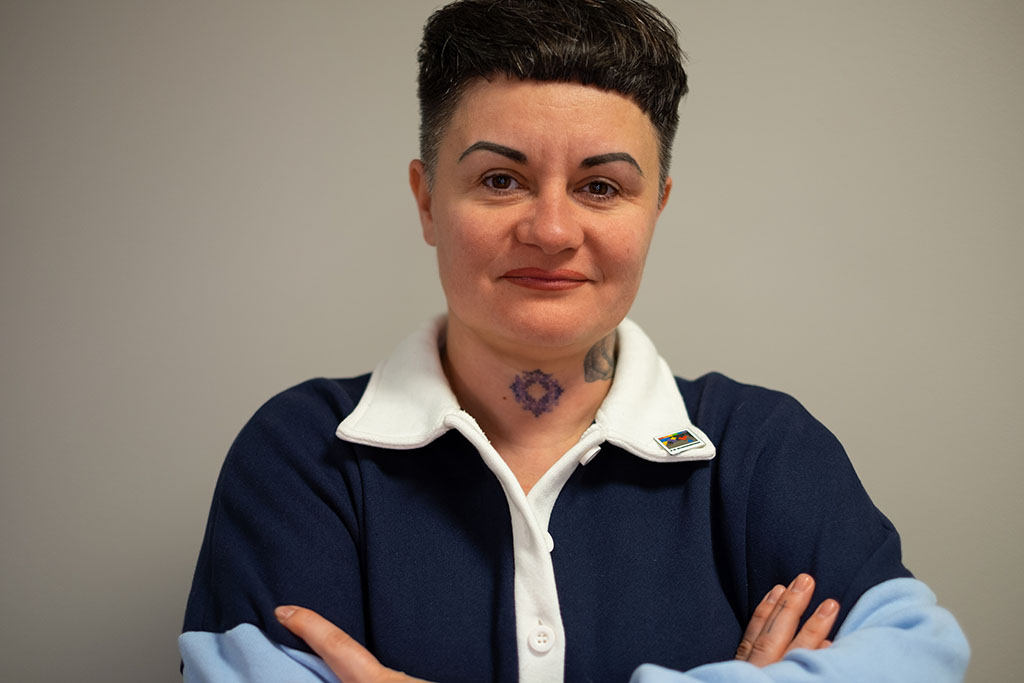
Sphere has more than 10 years of experience in working with creating safe spaces for lesbian, bisexual and transgender women and working on raising awareness of gender stereotypes and homophobia in Kharkiv, eastern Ukraine.
“Before the war, our organisation did educational activities. It was very important for us to organise different events and discussions about human rights for women and the LGBTQI community,” says Anna Sharyhina, co-founder of Sphere.
The work after the invasion
After Russia’s large-scale invasion of Ukraine February 24th, 2022, some of her colleagues moved–both to other parts in Ukraine and other countries. Despite the risks and heavy shelling, Anna stayed in Kharkiv and the organisation continued to work together remotely.
“After the first missile attacks, we understood that we should organise humanitarian aid and financing to support the community. When someone had to move from the occupied territories, we help them do it. We helped them buy clothes as well as rent and shelter.”
A few months in, they realised how important it was for them to not only provide humanitarian support but also continue with their main cause.
“We continued with our informational work because homophobia, transphobia and misogynism continued in Ukraine. We needed public attention so we created a campaign for equality called ‘United like never before’. It was important for us to tell people that the LGBTQI community is part of the Ukrainian society.”
Creating space for the community
In September, Sphere held their pride week in Kharkiv, a very important occasion for the visibility of the LGBTQI community during the war. They had performances in solidarity of Euro Pride as well as performances about the people who’ve died because of the invasion.
They held their march in the underground stations in Kharkiv to protect themselves from bombs and missiles, calling it MetroPride. Despite first being told that there weren’t allowed, the community gathered and marched ten stations together.
“For me it was a little bit like standing up to your bullies. They were against the march and could cancel our activities because of the war. But I said to them that the march will be in Kharkiv and if they cancelled it, we would just create another one again and again,” Anna says.
Thankfully, Sphere has a trusting relationship with the government in Kharkiv and they understood the importance of the march. Anna is very proud that they were able to walk but still can’t feel as happy as she wishes.
“I want our Pride to be celebrated like in other European countries, and our Kharkiv pride wasn’t a celebration. But I continue to believe in the Ukrainian society and that it could be possible in the future,” she says.
Protecting the community
When looking at the needs of the organisation Anna answers from two different perspectives.
“Right now [immediately after the invasion], many in the LGBTQI community in Ukraine, particularly in Kharkiv, need food, clothes and electrical power. But if we consider what people will need in the future, it’s important to note that even when the war is over, we will most likely still have a non-inclusive, non-tolerant patriarchal society,” Anna says.
“In the past, people were scared about coming out with their sexual orientation and gender identity, they feared losing their jobs. Now, they are scared for their lives since there is a double threat: there is the physical threat of losing their lives because of Russia as well as a threat of Russian homophobia directly threatening LGBTQI Ukrainians, especially those who live on the occupied territories or close to the frontlines. The LGBTQI movement will need to continue the fight for their human rights,” she continues.
Kvinna till Kvinna has supported women’s rights in Ukraine since 2014. When the large-scale invasion by Russia started in 2022, Kvinna till Kvinna activated our emergency fund to provide urgent support to women’s rights organisations and individual women human rights defenders in and from Ukraine in their work to help women exposed to violence, displaced women and families in need of immediate support.